
Frequently Asked Questions
about the Port Washington Data Center
Q: How large is the data center project?
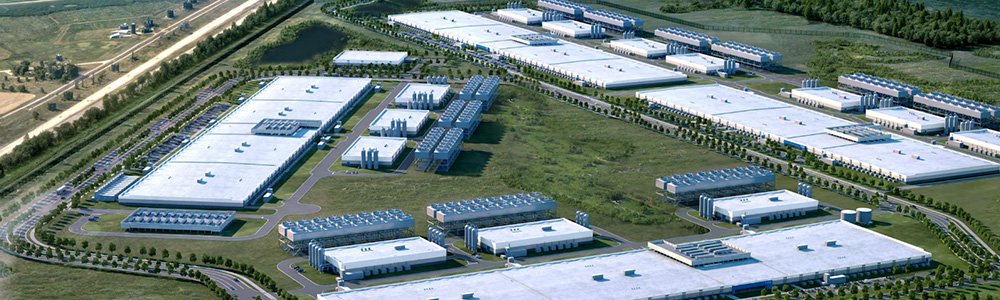
A: The project includes roughly 1900 acres (3 square miles). This increases the land area of the city by approximately 50%. The project cost of $15 billion is around 1,500x the current annual tax levy of the city. To put this amount of money in perspective, imagine purchasing approximately 250 new Boeing 737 Max 8 aircraft.
Q: Is the data center a completely privately funded project?
A: No, a $175 million tax increment district is being used to fund infrastructure which mostly benefits the Vantage project. With interest, the total repayments are projected to cost $458 million.
Q: What city infrastructure costs are included in the $458 million TID expenditures?
A: The largest 2 line items in the TID are the interest (~$187 million) and an electrical substation ($91 million), both of which would be unnecessary without the data center. For the third largest cost, water main improvements ($50 million), the argument has been made that extending water and sewer north of I43 will help benefit other future developments, however data centers do not make good neighbors and so the benefits to the city of this cost are unlikely to be realized as presented. The remaining costs are for other water improvements, administration costs, and some other small projects.
Q: Will the data center drain Lake Michigan?
A: This is a red herring question. Of course a single development won’t drain an entire great lake, but damage to the environment happens slowly as resources are increasingly overused. Vantage is already asking the city about future major water supply needs, and citizens currently have no method of verifying the water consumption of any single consumer.
Q: Will the project cause my electric rates to rise more than previously?
A: While this question is impossible to answer with certainty, we can look to states in the PJM interconnect area where data centers are prevalent. Capacity costs in states like Virginia and Ohio have skyrocketed due to new demand outpacing supply, as bringing new power generation online is expensive and takes years. WE Energies has countered this point with a proposal to require data centers to cover 75% of the costs for new generation they require, but there is no guarantee that the Public Service Commission will adopt this proposal, and the other ratepayers are still on the hook for the other 25%. Additionally, ATC is predicting costs of $1.3 billion – $1.6 billion just for the new power lines to the site and it isn’t clear who is paying for this.
Q: Was any environmental analysis completed?
A: The only environmental analysis conducted for this project was an afterthought analysis performed by the DNR long after decisions were made. Moreover, the DNR report does not instill confidence that this project will not have negative consequences to the environment:
https://widnr.widen.net/view/pdf/mur1nfm2oj/PWDC_EA-Summary_Dec2025.pdf
Q: Was the state involved in bringing this project to Port Washington?
A: State officials on both sides have made foolish decisions that helped attract troublesome projects like this. Wisconsin 2025 Act 16 removed
longstanding limits of 12% of city valuation for tax increment districts specifically for this project and another data center in Beaver Dam. These limits are intended to protect cities from exposing themselves to excess risks associated with a single development.
Q: Is the use of a TID for this project in line with their traditional use?
A: TIDs were intended to be used to help revitalize blighted areas and make a new development financially viable where it would otherwise not be. That is not the case here. The $175 million initial price tag on the initial funds represents less than 1.2% of the total project cost, which makes it very difficult to argue that the project wouldn’t otherwise be financially viable.
Q: How has the data center project affected free speech in Port Washington city meetings?
A: Whereas public comments were previously not limited, they began to be limited in October 2025, typically to 2 separate 30 minute sections. Police presence at common council meetings has also significantly been increased over time and residents opposed to the data center have become concerned about their access to the first amendment within those meetings.
Q: Is Port Washington alone in the data center fight in the midwest?
A: Absolutely not! As politicians around the midwest foolishly look to attract these developments which are sold as lifelines to small communities without the resources to properly vet all the inevitable negative impacts, communities are increasingly organizing and fighting back. Just to our south, Caledonia, WI recently defeated a 245 acre Microsoft data center. Several projects in Michigan and Indiana have also come under increasing scrutiny
and threat of defeat.
Stay Informed. Get Involved.
This is moving fast. Add your name to receive important updates, meeting alerts, and action opportunities as we work together to protect our community and Lake Michigan.
We’ll only email when it matters. No spam, ever.